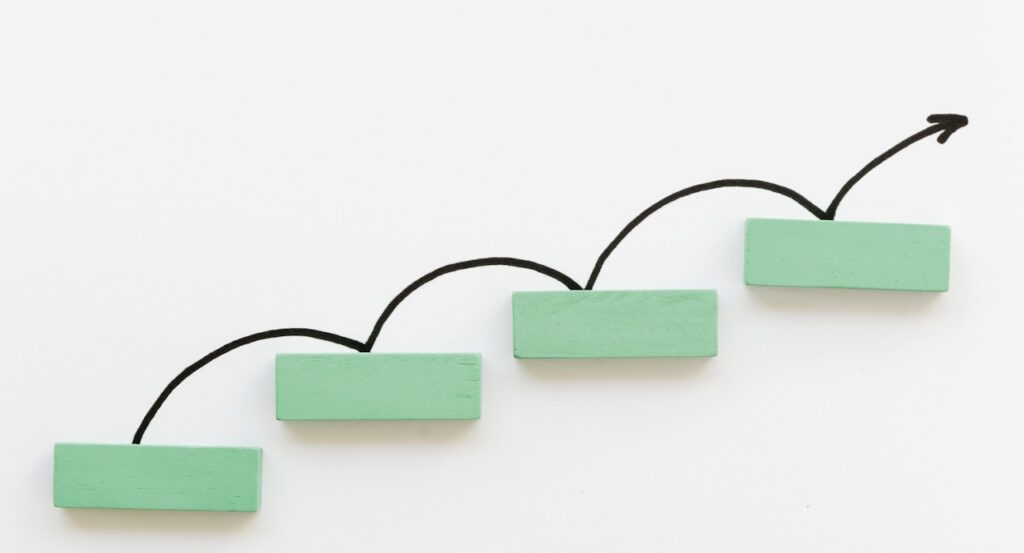
Once you know what you want, it’s important to break it down into small, manageable steps. Focus on what feels realistic for you and on what you can already do today. We often overestimate what we can achieve in a week, yet underestimate what’s possible after a year of small, consistent actions.
1. Why the brain prefers small steps
Your brain isn’t built for sudden change. Big shifts activate the stress system, causing your nervous system to resist instead of cooperate. Small steps, on the other hand, feel safe. They keep you within your window of tolerance — the zone between comfort and stress where you remain focused, present and capable of learning.
Neuroscience shows that this state is essential for real learning and behavioral change to happen.
In the podcast by Alexi Panos (Your Next Quantum Leap: The Power (and Process!) of Identity Shifts, listen here), she shares the same insight.When you try to change your life all at once, you unconsciously trigger stress and self-protection. Growth works better through micro-adjustments, even just 2 percent a day, that your body and brain can actually follow.
2. From big thinking to gentle doing
You don’t need to know the entire route. It’s enough to focus on the one step that feels doable today.
That step doesn’t need to be impressive; it just needs to move you in the right direction.
Examples:
- Instead of “I want to live healthier,” start with “I’ll drink one glass of water in the morning.”
- Instead of “I want less stress,” take one intentional pause between meetings.
Behavioral scientist BJ Fogg, author of Tiny Habits, explains that sustainable change works exactly this way. By attaching small actions to existing routines, you create momentum. Real change isn’t built on motivation, but on repetition and reward.
Accountability mentoring helps maintain that rhythm: clear agreements, reflection and awareness of progress, not through pressure, but through consistency.
3. Rhythm over results
If you only measure success by the end goal, you miss how much progress you’re already making along the way. Consistency isn’t about perfection; it’s about repeating what works, even on the days when it feels harder. Instead of asking “Did I reach my goal?”, try asking “What do I need today?”
That’s what accountability is about: not perfection, but presence. And that process, showing up step by step, is where real growth happens.
Conclusion: the power of slowing down
True change requires softness, not speed.
By slowing down intentionally, taking smaller steps and giving your nervous system time to adapt, you create space for sustainable progress.
Accountability mentoring helps you find that balance between action and rest, between direction and space. Because it’s the small steps, repeated with intention and awareness, that ultimately make the biggest difference.
Want to discover how you can build that rhythm without forcing it? Read more on Level Up Your Life or Level Up Your Company.